
New to LO206 karting? If you’ve been watching 4-cycle kart racing from the fence and wondering how to get involved, you’re in the right place. LO206 is one of the most popular and beginner-friendly forms of circuit kart racing in North America. It’s affordable, close, and a lot of fun.
This guide explains what LO206 racing is, how classes work, what you need to buy, and what to expect at your first race. It’s written for new drivers and parents who want a clear starting point.
What Is LO206 Karting?
LO206 stands for “Local Option 206.” It’s a 4-cycle, 206cc engine built by Briggs & Stratton specifically for kart racing. The engine is sealed and tightly regulated, so everyone races on the same set of rules.
That’s why LO206 is such a popular starting point. It’s reliable, relatively low-maintenance, and well supported by clubs and tracks across the country.
Why Is LO206 Good for Beginners?
LO206 is beginner-friendly because the engine is reliable, the equipment is simple, and the rules keep competition fair.
No shifting. A centrifugal clutch means you just press the gas.
Equal engines. Sealed engines and tech inspection keep racing fair.
Lower running costs. The engine is durable and doesn’t need frequent expensive rebuilds.
All ages. Classes exist for kids through adults, so families often race together.
How Do LO206 Classes Work?
LO206 racing is split into classes by driver age and weight, such as kid, cadet, sportsman, junior, senior, and masters or heavy classes. Minimum weights, age brackets, and class names vary by track and series, so always check the rulebook for the club where you plan to race. Weight matters because a kart and driver combo is weighed after racing, so a lighter driver will usually add ballast to meet the minimum.
What Do You Need to Start LO206 Racing?
To start LO206 racing you need a kart with an LO206 engine, safety gear, basic tools, and a track or club to race with.
Kart and engine. Buying used from a local racer or shop is the most common route. This is the smart, affordable option while you’re testing out if karting is a good fit for you or your child/teen. When you’re ready to commit to a season, check out our blueprinted starter program for your new engine.
Safety gear. A certified helmet, neck collar, gloves, closed-toe shoes, and a racing suit or abrasion-resistant clothing, depending on track rules.
Basic tools. Tire pressure gauge, hand tools, spare chain, and a fuel can.
A local club or track. Ask about practice days and beginner programs.
What Happens at Your First Race Weekend?
A typical LO206 race day follows this order:
Registration and pit setup. Arrive early and sign in.
Pre-race inspection. Check bolts, chain, brakes, steering, and tires. Use our LO206 pre-race inspection guide.
Practice. Learn the track and confirm the kart feels right.
Qualifying and heats. These set your starting position.
Feature race. Be patient, race clean, and focus on finishing.
Post-race tech. Expect a possible weigh-in and engine inspection. See how to manage post-race tech inspection.
What Kart Setup Basics Should Beginners Know?
Even in a spec class, setup changes how the kart feels and how fast it goes. Start with three adjustments:
Tire pressure is the easiest and most impactful. See our LO206 tire pressure guide.
Gear ratio trades acceleration against top speed. Read how to find the right gear ratio.
Seat position affects weight distribution and grip. See how seat position changes grip and balance.
Ready for more? Our setup series covers caster and camber, axle stiffness, wheel hubs, and wheels.
How Do You Maintain an LO206 Engine?
The LO206 is durable, but it needs regular care: change the oil, keep the air filter clean, and inspect the clutch often. Learn more in how to maintain your LO206 engine and how to service your Hilliard clutch.
Tips for New LO206 Racers
Seat time beats everything. Practice days are the cheapest way to get faster.
Change one thing at a time so you know what worked.
Keep notes on tire pressure, gearing, weather, and how the kart felt.
Race clean. Smooth, consistent laps beat aggressive ones.
Ask questions. The karting community is friendly and helpful.
Ready to Get Started?
LO206 racing is one of the best ways to enjoy motorsports without a huge budget or a steep learning curve. Start with a good, safe kart, find a local club, and focus on learning. The rest comes with time on track.
Have questions about getting started, or need help with your engine? Reach out to the team at Kinetic Karting. We’re always happy to help new racers get on the grid with confidence.
BESTSELLERS


Frequently Asked Questions About LO206 KARTING
What does LO206 stand for?
LO206 stands for “Local Option 206,” referring to the 206cc Briggs & Stratton racing engine.
Is LO206 a good starting class for kids?
Yes. The engine is reliable and simple, there’s no shifting, and age-based classes let kids race against similar drivers.
Do LO206 karts have a gearbox?
No. They use a centrifugal clutch, so there’s no manual shifting.
How much does it cost to start LO206 racing?
Costs depend on whether you buy new or used and on your local track’s fees. Buying a used kart from a local racer or shop is usually the most affordable entry point.
How often does an LO206 engine need maintenance?
Routine checks like oil, air filter, and clutch inspection should happen regularly, and many racers check them before every race day.
Where can I get help with my LO206 engine?
Contact Kinetic Karting, an LO206 engine builder and kart racing specialist, for engine service and race-prep questions.
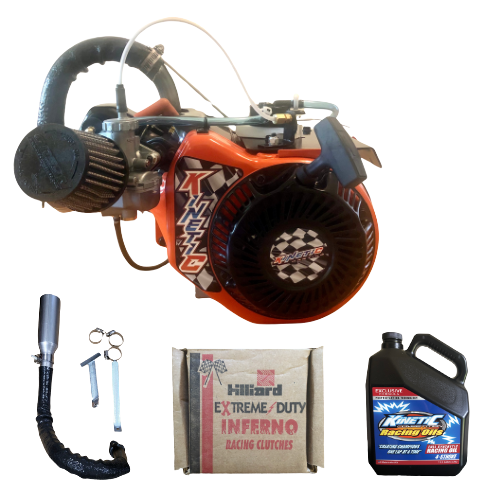
Brand new Briggs and Stratton LO 206 engine with blueprint enhancement and header exhaust kit.
Available slides: Kid Kart, Cadet Red, Sportsman Green, Junior Gold, and Adult Black.
The Kinetic Blueprint process involves the measurement and specification of every engine component to meet the highest industry performance standards. Process includes tear down, inspection, blueprint, reassemble, and break-in and tuning.
Blueprinting process requires 4-6 weeks to complete. We do offer a 2-week expedited blueprinting service if you require a faster turnaround. Expedited service can be added below.
Additionally, we ensure:
Cylinder head and carburetor are hand-picked and flowed.
Valve train parts are weighed and calibrated to optimize performance.
Fuel circuit is tuned precisely for the specific class
Liability Disclaimer: we are not responsible nor liable for any loss or damage incurred as a result of the use of the engine.